

Why Remittance Management Remains a Challenge
Handling payments in healthcare billing has always been one of the trickiest and most error-prone workflows. Staff often wrestle with hundreds or thousands of EOBs (Explanations of Benefits) every month stacks of paper, PDFs, faxes, and inconsistent payer formats. The manual effort required not only slows cash flow but also introduces mistakes, underpayments, and missed opportunities for revenue recovery.
Even as healthcare technology advances, many providers still juggle hybrid workflows: some claims post automatically through electronic remittances (ERA), while others require painstaking manual entry from paper EOBs. The result? Bottlenecks, longer accounts receivable cycles, and frustrated billing staff.
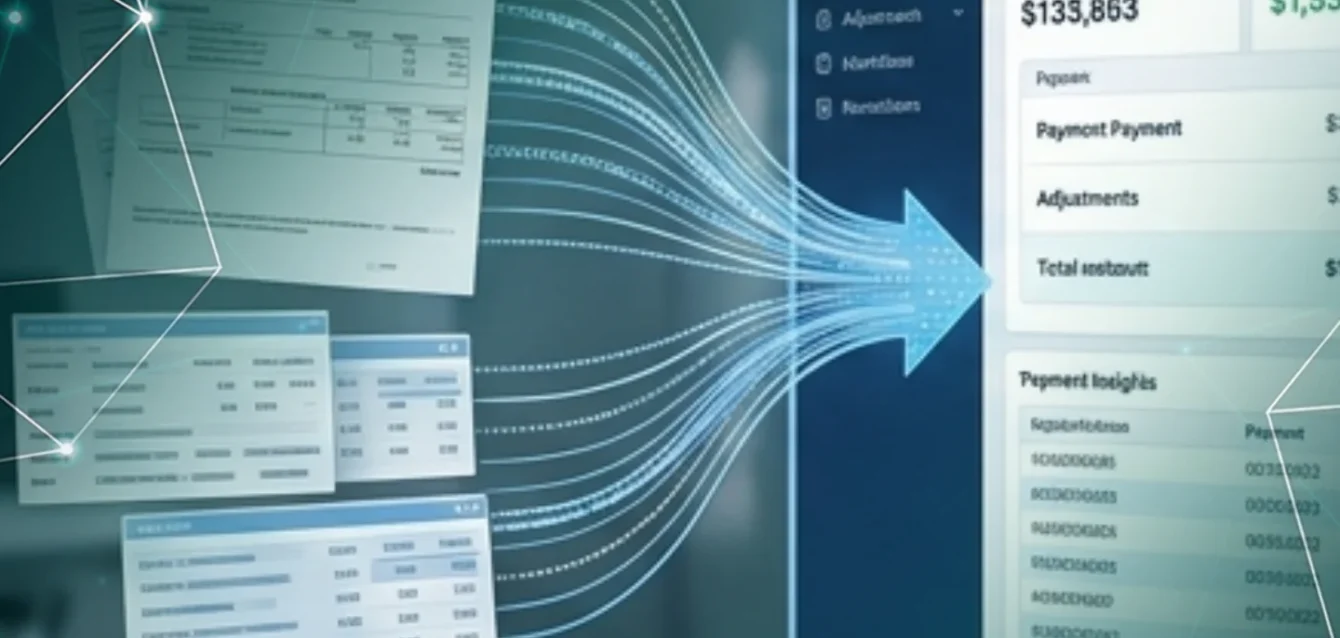
AI agents are changing this landscape. These intelligent systems can read complex documents, extract critical payment data, and convert them into actionable formats for billing software. By automating this process, staff are freed to focus on high-value activities like managing denials, addressing underpayments, and communicating with patients.
In this blog, we’ll explore:
Table of Contents
- Understanding the EOB to ERA Gap in Healthcare Billing
- The Technical Architecture Behind AI-Powered Remittance Processing
- Real-World Applications Across the Revenue Cycle
- Overcoming Implementation Challenges and Technical Barriers
- Data Quality and Validation: The Key to AI Accuracy
- Top Validation Rules That Reduce Claim Denials
- Measuring Success and Continuous Improvement
- The ROI of AI-Powered Remittance Automation
- The Future of Intelligent Revenue Cycle Management
- Claimity’s Approach to Smarter Remittance Management
- Conclusion & CTA
1. Understanding the EOB to ERA Gap in Healthcare Billing
The healthcare payment system is fragmented. Insurers are supposed to send payments in standardized electronic formats, but many still rely on paper or scanned EOBs. Each EOB contains essential information: patient details, claim numbers, service dates, procedure codes, billed and allowed amounts, adjustments, and payment information.
Manual entry is slow and error-prone. A single miskeyed digit can misapply a payment. Missed adjustments may lead to inaccurate patient billing, and overlooked denials mean missed opportunities for appeals.
Electronic Remittance Advice (ERA) files standardize this information in ANSI X12 835 format, allowing direct posting into billing systems. But not all payers support ERAs, resulting in a dual-track system: some claims post automatically, while others must still be interpreted manually.
The consequences are serious:
- Delayed cash flow
- Increased accounts receivable aging
- Lost opportunities for auditing contract compliance
A 2019 Black Book Market Research study highlighted that healthcare providers spend up to 40% of AR staff time manually posting EOBs, with an error rate of 2–5% per entry, resulting in millions of dollars lost annually.
2. The Technical Architecture Behind AI-Powered Remittance Processing
Modern AI agents are far more than basic OCR. They combine OCR, NLP, and machine learning to interpret and structure complex EOB data. Here’s how:
- Advanced OCR: Reads printed, handwritten, and poorly scanned text across multiple document types. Deep learning models trained on millions of healthcare documents ensure near-perfect recognition.
- Contextual Understanding: NLP interprets semantics, so terms like “Patient Responsibility,” “Amount Due from Patient,” and “Patient Owes” are understood as the same field.
- Data Structuring: AI identifies key segments patient demographics, claim details, service lines, payments, adjustments, and denial reasons and converts them into structured data.
- Validation Layers: The AI verifies calculations, checks consistency across fields, and flags anomalies. For example, if a procedure code typically reimburses 80% of the billed amount but the extracted data shows 20%, the system flags it for review.
- ERA Conversion: Extracted data maps to ANSI 835 EDI standards for direct posting into billing systems. Multiple claims in a single EOB are accurately grouped.
- Exception Handling: Items that fail confidence thresholds are routed to humans with context, ensuring accuracy and continuous model training.
Suggested Infographic: AI-Powered Remittance Pipeline:
EOB Intake → OCR → NLP → Validation → ERA Output → Billing System Posting
This system reduces manual processing from 10–15 minutes per EOB to seconds, enabling overnight batch processing and drastically improving efficiency.
3. Real-World Applications Across the Revenue Cycle
AI-powered remittance processing impacts nearly every aspect of revenue cycle management:
- Payment Posting: Automates data extraction and posting, reducing manual effort by up to 90%.
- Denial Management: Structured data allows rapid identification, routing, and appeals.
- Contract Compliance: Highlights underpayments and deviations from agreements, revealing revenue recovery opportunities.
- Patient Billing Accuracy: Accurate postings reduce patient statement errors, improving collections and satisfaction.
- Payer Performance Tracking: Systematic data enables comparative analysis across insurers.
Example: A mid-sized hospital processing 2,000 EOBs monthly reduced manual entry time from 120 hours to 15 hours, while denial management efficiency increased 60%.
4. Overcoming Implementation Challenges and Technical Barriers
Transitioning to AI-powered remittance processing requires careful planning:
- System Integration: Connect EOB intake channels (fax, email, portal) seamlessly.
- Output Mapping: Configure ERA files for practice management systems.
- Data Quality: Poor scans or unusual payer formats can reduce accuracy.
- Staff Adoption: Train staff to supervise AI outputs and handle exceptions.
- Compliance & Audit: Maintain HIPAA-compliant audit trails.
- Cost Planning: Include integration, training, and ongoing AI updates in ROI.
Pro Tip: Run parallel workflows initially AI alongside manual processing to validate accuracy before full deployment.
5. Data Quality and Validation: The Key to AI Accuracy
High-quality input is critical. AI accuracy can drop from 97% to 85% with poor-quality EOBs.
Key factors affecting performance:
- Blurry scans or faxes: +15% manual review
- Handwritten notes: +5–12% field errors
- Multi-page EOBs: +2–4% matching errors
Mitigation strategies:
- Preprocessing for clarity
- Confidence thresholds (<90% routed to humans)
- Active learning with monthly retraining
- Continuous monitoring for new payer formats
6. Top Validation Rules That Reduce Claim Denials
Even the most sophisticated AI is only as good as the rules it follows. High-quality validation ensures that claims post correctly, denials are minimized, and revenue is maximized. Certain pre-submission validation rules can prevent up to 80% of avoidable denials, giving billing teams a huge advantage.
The “Big 5” Rules
These rules catch the majority of denials and should always be prioritized:
- Eligibility Verification – Ensures the patient has active coverage.
- Denial type prevented: Expired or missing coverage
- Validation: Real-time API check against payer enrollment files
- Prior Authorization Check – Confirms that services requiring approval have valid authorization numbers.
- Denial type prevented: Missing auth numbers
- Validation: Cross-reference service codes against payer authorization requirements
- CPT/HCPCS Code Validation – Checks that procedure codes are valid for the payer and date of service.
- Denial type prevented: Invalid or inactive codes
- Validation: Payer-specific acceptance matrix
- Diagnosis-Code Pairing – Ensures codes align with medical necessity standards.
- Denial type prevented: Medically unnecessary
- Validation: NCCI edits + LCD/NCD compliance
- Timely Filing – Confirms claims are submitted within the payer’s allowed window.
- Denial type prevented: Late submissions
- Validation: Automatic comparison of claim date vs payer timely filing limits
High-ROI Secondary Rules
These rules cover the remaining common denial sources:
- Patient Demographics (5%) – Name/DOB/Address match payer records
- Modifier Requirements (4%) – Ensures required modifiers are present
- Referral Validation (3%) – Confirms referring provider is in-network
- Place of Service (2%) – POS codes align with billing location
- Duplicate Claims (2%) – Prevents resubmission of previously submitted claims
By front-loading validation, providers catch errors before submission, avoiding costly appeals. Practices implementing these rules often see 50–65% denial reduction within the first 30 days.
Claimity Insight: The platform automatically enforces all top 10 rules, achieving 94% clean claim rates across 1,000+ payers, minimizing rework and accelerating cash flow.
7. Measuring Success and Continuous Improvement
AI-powered remittance processing isn’t a “set it and forget it” solution. Continuous measurement ensures that efficiency gains and revenue benefits are realized.
Key performance indicators (KPIs) to monitor:
- Processing time per remittance: Expect reductions of 80–90%
- Exception rates: Track why certain remittances fail and refine rules
- Payment posting accuracy: Aim for 99%+
- Days in Accounts Receivable (AR): Reduced AR days improve cash flow visibility
- Cost per remittance: Compare automated vs manual workflows to quantify savings
A robust feedback loop, using AI insights and human review, enables ongoing optimization. As new payer formats emerge or unusual exceptions appear, retraining the AI keeps the process accurate and efficient.
8. The ROI of AI-Powered Remittance Automation
Many healthcare leaders hesitate to invest in AI due to upfront costs, but the financial benefits are substantial.
- Faster Posting: Overnight batch processing enables payments to post in hours rather than days.
- Reduced Staff Time: Manual posting can take 10–15 minutes per EOB; AI reduces this to seconds, freeing staff for high-value tasks.
- Denial Reduction: Structured data allows quick identification and management of denials, reducing write-offs.
- Contract Compliance: Automated tracking ensures payment deviations are caught early, unlocking lost revenue.
Real-World Example:
A mid-sized hospital processing 2,500 EOBs monthly:
- Manual entry time: 125 hours
- Post-AI automation: 18 hours
- Denial management efficiency: +60%
- Estimated recovered revenue: $250,000 annually
By accelerating processing and improving accuracy, practices can recover millions in lost revenue and improve patient satisfaction simultaneously.
9. The Future of Intelligent Revenue Cycle Management
AI-driven remittance automation is just the beginning. The next frontier of revenue cycle management includes:
- Autonomous Coding & Charge Capture: AI automatically codes services and posts charges correctly.
- End-to-End Revenue Cycle Automation: Integrates scheduling, pre-authorizations, claims, denials, and remittances seamlessly.
- Predictive Analytics: AI forecasts denials, cash flow gaps, and payer behavior before they impact revenue.
- Real-Time Payer Interaction: AI can engage with payer portals directly, reducing wait times and manual follow-ups.
- Blockchain Payment Records: Immutable, secure logs of remittances for audit and compliance.
- Conversational AI Interfaces: Staff and patients can interact with AI for updates, approvals, and reporting.
Investing in AI today ensures organizations are prepared for a fully automated, predictive, and transparent revenue cycle tomorrow.
10. Claimity’s Approach to Smarter Remittance Management
While Claimity does not provide direct AI-driven EOB-to-ERA conversion, its platform empowers organizations to manage remittance data smarter, setting the stage for advanced automation.
Here’s how Claimity helps:
- Centralized Data Repository: Consolidates remittance data from multiple sources, ensuring a single source of truth.
- Advanced Exception Management: Contextualizes and prioritizes exceptions like underpaid claims or recurring discrepancies.
- Workflow Optimization: AI-driven rules suggest next steps and track remittance statuses, allowing staff to focus on complex issues.
- Enhanced Financial Visibility: Dashboards track AR aging, payer performance, and historical trends for actionable insights.
- Compliance & Audit Ready: Full audit trails for internal, regulatory, and payer review.
- AI Adoption Prep: Standardizes and validates data to create ideal input for future AI remittance automation.
- Human-Centered Design: Empowers staff to focus on problem-solving, not repetitive tasks.
In short: Claimity is the operational backbone that makes intelligent remittance automation feasible, accurate, and scalable.
Conclusion
AI-powered remittance processing turns a tedious, error-prone process into a strategic advantage. Faster posting, accurate denial management, and improved cash flow allow billing teams to focus on high-value tasks rather than repetitive data entry.
For educational purposes, understanding this AI-driven transformation helps practices plan for the future even if they’re not fully automated yet. Leveraging platforms like Claimity enhances data quality, ensures compliance, and provides a scalable foundation for adopting AI remittance solutions.
Explore how Claimity can help your practice optimize billing workflows and achieve faster, error-free remittance processing. Discover actionable insights, improved cash flow, and smarter AR management today.
